WhatsApp us
19 Jan 2026
Silos in IT Companies. A Hidden Barrier to Performance
In many IT companies today, teams work hard but outcomes still fall short. Projects get delayed, quality suffers, and employees feel frustrated despite having strong technical skills. One of the most common and least discussed reasons for this is the presence of organisational silos.
In many IT companies today, teams work hard but outcomes still fall short. Projects get delayed, quality suffers, and employees feel frustrated despite having strong technical skills. One of the most common and least discussed reasons for this is the presence of organisational silos.
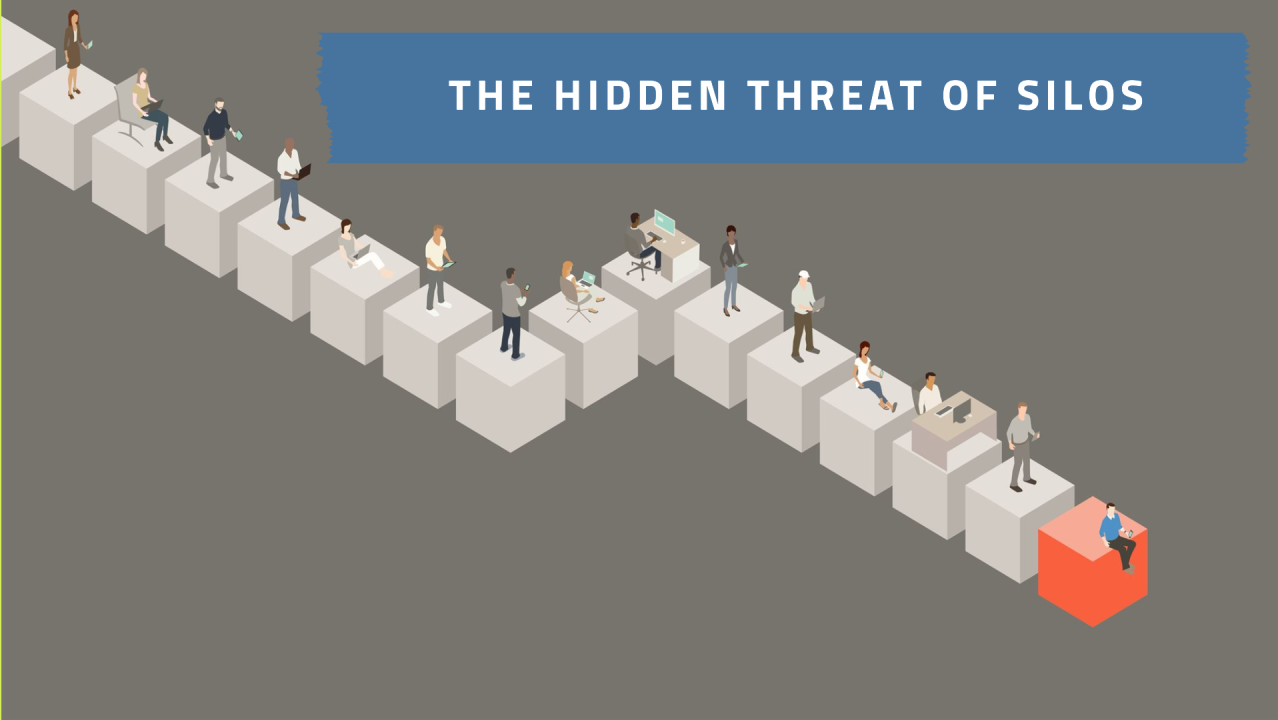
Silos occur when teams or departments operate in isolation rather than as part of a connected system. While specialisation is essential in IT, isolation creates invisible barriers that slow down performance and limit growth.
At Cokonet Academy, while working closely with learners and professionals undergoing Sap Training in Kerala, this challenge repeatedly surfaces as a real-world problem that technical skills alone cannot solve.
What Are Silos in IT Organisations
A silo forms when information, ownership, and decision-making stay confined within a single team or function. Communication with other teams becomes limited, reactive, or transactional.
In IT companies, silos commonly appear between:
Development and testing teams
IT and business stakeholders
SAP functional and technical consultants
Operations, support, and delivery teams
Each team focuses on its own targets, often without visibility into the larger business objective.
Why Silos Form in IT Companies
Silos rarely form intentionally. They are usually the result of structural and cultural factors that build up over time.
Common reasons include:
Rapid organisational growth without aligned processes
Highly specialised roles with narrow responsibilities
Rigid hierarchies and approval chains
Performance metrics that reward individual teams instead of shared outcomes
Heavy reliance on tools instead of meaningful conversations
When teams optimise locally, the organisation fails globally.
The Real Impact of Silos on Performance
The impact of silos goes far beyond communication gaps. They directly affect business results.
Slower Delivery and Decision-Making
Projects move slowly because dependencies are unclear and approvals get stuck between teams.
Reduced Innovation
Ideas remain trapped within departments instead of evolving through collaboration.
Higher Defects and Rework
Lack of shared understanding leads to repeated corrections and missed requirements.
Employee Frustration and Burnout
High-performing employees feel blocked, unheard, and disconnected from outcomes.
Poor Customer Experience
End users experience delays, inconsistencies, and quality issues that teams struggle to resolve.
Common Signs of a Silo Mindset
Silos are often visible in day-to-day behaviour, not organisational charts.
Some clear indicators include:
Limited cross-team communication
“Not my responsibility” responses
Poor knowledge sharing
Blame during failures instead of problem-solving
Teams protecting scope instead of outcomes
These signs point to systemic issues rather than individual shortcomings.
Why Breaking Silos Is a Leadership Imperative
Silos cannot be removed by tools or policies alone. They require conscious leadership and cultural change.
Effective ways to break silos include:
Building cross-functional teams aligned to outcomes
Aligning goals and KPIs across departments
Improving transparency in planning and decision-making
Encouraging shared ownership and accountability
Leaders modelling collaboration instead of control
Technology succeeds when people collaborate. Without this, even the best systems fail to deliver value.
Why This Matters for IT Professionals in Kerala
Kerala has a strong base of IT professionals working on enterprise projects across India and global markets. Employers today expect more than technical execution.
Modern roles demand:
Business awareness
Cross-functional communication
Ownership beyond job descriptions
Understanding of end-to-end processes
This is especially true in SAP and ERP environments. Professionals undergoing Sap Training in Trivandrum and Sap Training in Kerala must be prepared for real project dynamics, not just software usage.
The Role of Training in Building Enterprise Readiness
Traditional technical training often focuses on tools and transactions. However, enterprise readiness requires a broader mindset.
Effective professional training should include:
Real project scenarios
Cross-team workflows
Business context behind technical decisions
Communication and ownership expectations
This approach helps learners transition smoothly from classroom learning to real IT environments.
Why Choose Cokonet Academy
Cokonet Academy focuses on preparing learners for real-world enterprise challenges, not just certifications.
What sets the academy apart:
Industry-aligned training programs
Focus on enterprise mindset and collaboration
Real-time project exposure
Placement-oriented preparation
Strong connect with Kerala and GCC hiring expectations
Learners gain clarity not just on tools, but on how organisations actually work.
Visit Our Training Institute for a Free Consultation: https://share.google/NOmVa32DeF7lv5fCn
Fees, Batches, and Placements in Kerala and Trivandrum
Cokonet Academy offers flexible batch options designed for:
Students and fresh graduates
Working professionals
Career switchers
Placement support focuses on interview readiness, communication skills, and enterprise expectations, helping learners move confidently into professional roles.
Frequently Asked Questions
What are silos in IT companies Silos are isolated teams or departments that operate without effective collaboration.
Why are silos harmful They slow delivery, reduce quality, and create employee frustration.
Can tools alone break silos No. Tools help, but culture and leadership drive collaboration.
How do silos affect SAP projects They cause misalignment between functional and technical teams.
Are soft skills important in IT Yes. Communication and ownership are critical enterprise skills.
Do MNCs value cross-functional thinking Yes. It is a key expectation in global delivery teams.
How can freshers avoid silo thinking By understanding end-to-end processes and business goals.
Does Sap Training in Trivandrum include real scenarios Yes. Practical exposure improves enterprise readiness.
Why is enterprise mindset important It helps professionals deliver value beyond assigned tasks.
How does Cokonet Academy prepare professionals Through industry-aligned training and real-world project exposure.
Build Enterprise-Ready Skills for Long-Term Growth Build Your Career with Enterprise-Ready Skills
Your global tech and finance career starts at Cokonet Academy.
Take the next step toward a successful tech career with Cokonet Academy, Kerala’s leading AI-integrated training institute. With over 11,200 successful placements and 50+ corporate hiring partners, Cokonet Academy helps learners upskill and become job-ready for top MNCs.
Cokonet Academy is Kerala’s leading AI-integrated training institute with:
11,200+ successful placements
50+ corporate hiring partners
Expert trainers in SAP (FICO, MM, ABAP), AWS, Python with AI, Power BI
Free soft skills and MNC-readiness programs
Learn, upskill, and get hired, your global tech career starts here.
Visit: www.cokonet.com
Call: +91 8075 400 500